An Inquiry into the Spectrum: Wealth, Extremes, and the American Balance Sheet
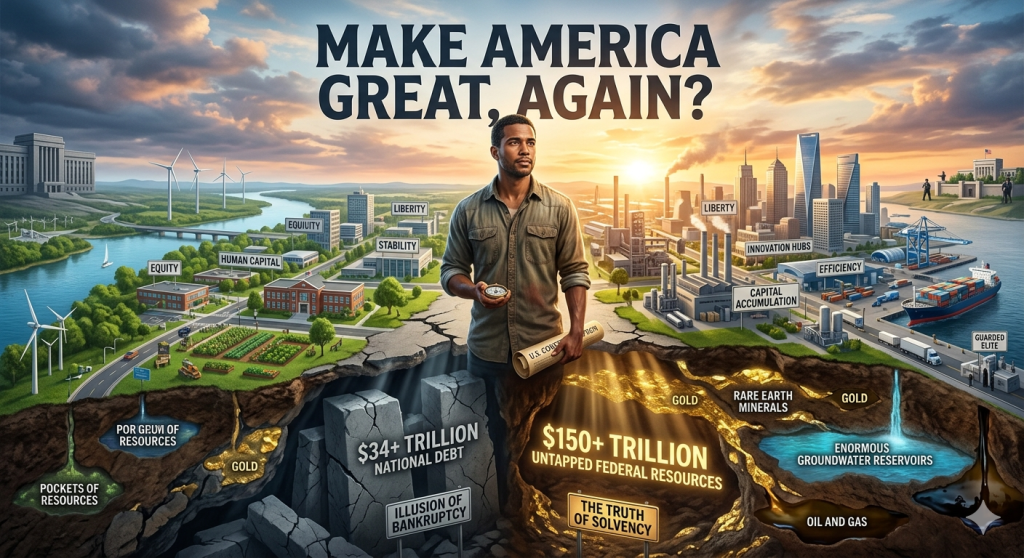
Welcome back to a personal elenchus. Today, we are putting the American political economy through the crucible of inquiry. We constantly hear the shouting from the wings of the political stage, but rarely do we strip away the rhetoric to examine the actual machinery of our ideologies and our national ledger.
What happens when we move along the political spectrum? What drives our economic engines, and what is the true nature of the wealth and debt of the United States? Let us examine the premises we accept as truth.
### The Spectrum: Moving Left and Right
At its core, the political spectrum is not a straight line, but a balancing act between two fundamental human drives: the desire for collective equity and the desire for individual liberty.
**Moving Left (Liberalism)**
As we move to the left, the philosophy shifts toward the collective. The underlying assumption is that society is a shared enterprise, and the state is a tool to level the playing field. Economically, liberal policies focus on demand. The belief is that by empowering the working and middle classes through social safety nets, higher wages, and public investment in infrastructure and education, you create a robust consumer base.
* **The Economic Benefit:** Stability and human capital. Liberal economics mitigate the harsh boom-and-bust cycles of raw capitalism. By investing in public goods, the state builds an educated, healthy workforce that drives long-term innovation, while reducing the wealth inequality that can destabilize a society.
**Moving Right (Conservatism)**
As we move to the right, the focus narrows to the individual and the free market. The core assumption is that liberty is paramount, and the state should intervene as little as possible. Economically, conservative policies are supply-side. The theory is that if you lower taxes and reduce regulatory friction, you unleash the creative and productive power of entrepreneurs and corporations.
* **The Economic Benefit:** Efficiency and capital accumulation. Unfettered markets are unparalleled at allocating resources efficiently. By allowing individuals and businesses to keep more of their capital, conservative economics fuel rapid innovation, job creation, and overall economic expansion.
### The Pathology of Extremes
A philosophy becomes a pathology when it is taken to its absolute extreme, devoid of its necessary counterweight.
* **The Extreme Left:** When collective equity is pursued at all costs, it invariably requires authoritarianism to enforce. The extreme left manifests as state communism. Private property is abolished, individual ambition is penalized, and the economy stagnates because the natural human incentive to innovate is removed. The state, attempting to manage everything, eventually crushes the very people it set out to protect.
* **The Extreme Right:** When individualism and traditional hierarchies are taken to the extreme, the result is often fascism or plutocratic oligarchy. The extreme right replaces the free market with corporatism, where a small, powerful elite controls the wealth and the levers of government. Marginalized groups are suppressed, and liberty is reserved only for those at the top of the social hierarchy.
Truth, as is so often the case, refuses to live on the fringes. A functional society requires the tension of both sides: the engine of conservative free enterprise and the steering wheel of liberal social responsibility.
### The American Ledger: Revenue and Net Worth
To ground this philosophical inquiry, we must look at the hard numbers. How much capital is actually moving through the American system?
In Fiscal Year 2025, the United States federal government collected approximately **$5.23 trillion** in tax revenue. To put that into perspective, that is roughly 17% of the total economic activity (GDP) of the nation, with individual income taxes making up over half of that collection.
But what about the individual American? The numbers reveal a fascinating dichotomy between the “average” and the “typical” citizen.
According to the latest data from the Federal Reserve, the **average (mean) net worth** of an American family is roughly **$1.06 million**. However, this number is heavily skewed by the astronomical wealth of the top 1%.
The **median net worth**—the exact middle point where half of Americans have more and half have less—is **$192,700**. This gap highlights the tension between the conservative success of wealth generation and the liberal concern for wealth distribution.
### The Illusion of Debt and the Wealth Beneath Our Feet
We are constantly told that the United States is drowning in a national debt that exceeds $34 trillion. It is framed as a looming apocalypse. But let us apply the Socratic method here: Is a man bankrupt if he owes $100,000 but owns a gold mine worth $10 million that he simply hasn’t tapped yet?
The American national debt is often viewed in a vacuum, focusing only on the liability side of the balance sheet. But a true accounting requires us to look at our assets. The United States holds the most staggering portfolio of untapped natural resources on the planet.
Beneath federal lands and offshore waters lie immense reserves of oil, natural gas, coal, and critical strategic minerals (like copper, gold, and rare earth elements). The Institute for Energy Research has estimated that the technically recoverable oil and natural gas owned by the federal taxpayer is worth over **$128 trillion**. When factoring in federal coal resources, the total worth of government-owned fossil fuels jumps to over **$150 trillion**.
This does not even account for the value of the surface land, the timber, the agricultural capacity, or our vast freshwater resources.
When we view the nation as an enterprise, the “debt crisis” is revealed to be somewhat of an illusion—or, more accurately, a liquidity issue rather than a solvency issue. We have the debt, yes, but it is backed by an asset portfolio that dwarfs our liabilities by a factor of five or more. We choose not to liquidate these assets immediately for very valid environmental, strategic, and economic reasons. Preserving these landscapes and ecosystems provides immense value in itself.
The debt is real in terms of the cash flow required to service the interest, but the idea that America is fundamentally “broke” is a myth. We are, geologically and economically, the wealthiest patch of dirt in human history. The true political question is not whether we have enough wealth to survive, but how we choose to balance the extraction of that wealth with the preservation of our future.
To explore more about the natural capital held by the United States, you can watch Securing America’s Mineral Future. This congressional hearing delves into the strategic and economic value of the untapped critical minerals within the United States.


 A Personal ELENCHUS