The Spectacle Over Substance: Unpacking America’s Growing Sickness
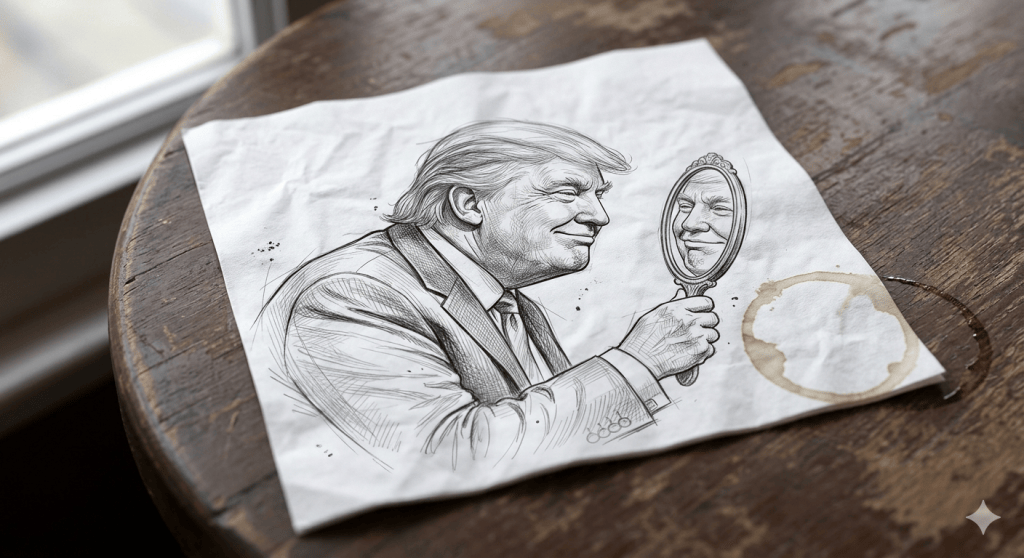
There is a growing sickness in America, but it isn’t one you can diagnose with a medical test. It is a cultural ailment—an erosion of our collective standards for leadership, character, and integrity. We are witnessing a profound shift in what the American public is willing to accept, and perhaps more alarmingly, what it is eager to applaud.
At the center of this crisis is a startling reality: the highest office in the land, the presidency, has been transformed by an archetype who is, at his core, simply a marketer for his own brand. When we strip away the partisan noise, we are left looking at an unapologetic manifestation of narcissistic personality, wrapped in the flag and sold back to the public as strength.
The Cult of the Brand Marketer
Historically, the presidency was viewed—at least ideally—as a position of profound public service and quiet dignity. Today, that ideal has been replaced by the relentless machinery of self-promotion.
When a leader is primarily a marketer for his own brand, every policy, every crisis, and every public address becomes nothing more than a vehicle for personal aggrandizement.
What should shock the conscience of the American public is the sheer brazenness of it all. There are no apologies for the conduct. There is no attempt to hide the self-serving motives. The narcissism is performed openly, on the world stage, with a disturbing lack of shame. Yet, instead of recoil, we see cheers.
Confusing Sickness with Strength
How did we get here? Why are so many Americans applauding behavior that, in any other context—in a friend, a coworker, or a family member—would be immediately recognized as toxic?
The tragedy lies in a collective delusion. A significant portion of the populace has been conditioned to mistake a grave psychological and moral sickness for authentic power.
- The Illusion of Decisiveness: Narcissism often presents itself as unwavering confidence. To a frustrated electorate, this toxic certainty is easily mistaken for strong leadership.
- The Appeal of the Anti-Hero: In an era of deep institutional distrust, rule-breaking is wrongly celebrated as a necessary disruption.
- The Normalization of Outrage: By constantly moving the line of acceptable behavior, the shock value wears off, leaving a numb public willing to tolerate the intolerable.
People have forgotten—or have chosen to ignore—that true power is rooted in service, empathy, and restraint. What we are witnessing is not strength; it is a profound weakness masquerading as dominance.Corruption, Not Expedience
There is a temptation to excuse this behavior under the guise of “expedient means.” The argument goes that one must break some eggs to make an omelet, or that a ruthless leader is necessary to achieve political goals in a harsh world.
We must call this what it is: corruption. It is a corruption of our values, a corruption of the office, and a corruption of the truth. When a leader prioritizes their ego and their brand above the well-being of the republic, the system rots from the inside out. Accepting this open narcissism as merely “the cost of doing business” in modern politics is a dangerous surrender of our moral compass.Finding the Cure
The “growing sickness” in America is not just about the person holding the office; it is about the mirror that person holds up to the rest of us. It forces us to ask uncomfortable questions about what we value, what we are willing to excuse, and what kind of nation we actually want to be.
Curing this sickness requires a return to reality. It requires us to collectively stop rewarding the marketer and the narcissist. We must relearn how to be shocked by abhorrent conduct, refuse to call corruption “expedient,” and demand that true power be tethered once again to public duty, not a personal brand.


 A Personal ELENCHUS