Cross-Examining Fitness, Hormones, and Flourishing After 40
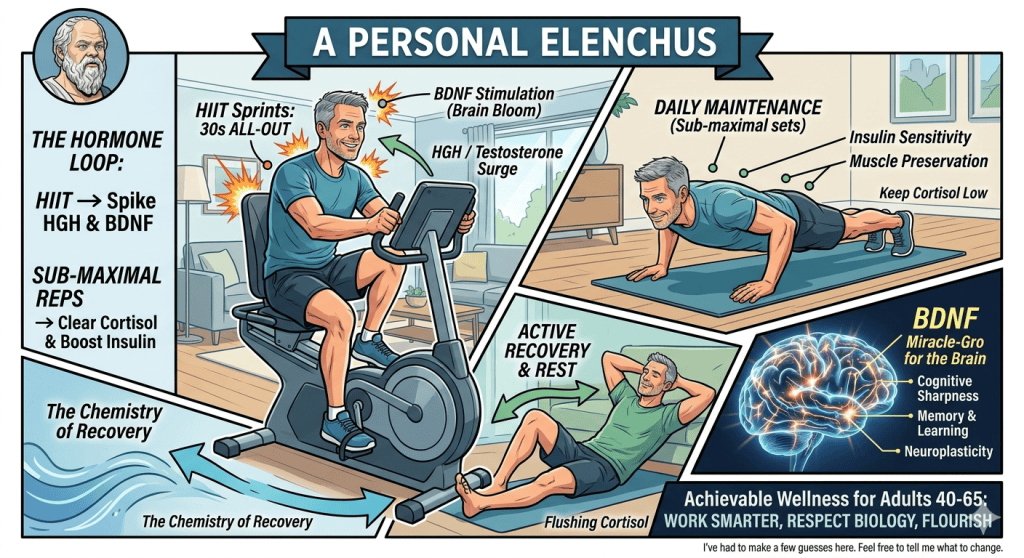
Hitting the milestone of 40 initiates a profound shift in perspective. Just as the Socratic method teaches us to rigorously examine our internal beliefs, aging demands that we turn that same critical eye toward our physical habits. The goal is no longer just aesthetics; it is the pursuit of eudaimonia—true, holistic human flourishing. And you cannot cultivate a sharp, thriving mind without maintaining a capable, resilient body.
For adults navigating the stretch between 40 and 65, the fitness industry often sells two extremes: either punishing daily workouts that lead straight to injury, or overly passive routines that do nothing to halt physical decline. But there is a middle path. By strategically combining High-Intensity Interval Training (HIIT), daily maintenance, and adequate rest, we can effectively “biohack” our endocrine system.
Here is how a balanced approach to physical stress can optimize testosterone, manage cortisol, and boost brain health, proving that peak vitality is highly achievable well into our sixties.
The Engine: High-Intensity Interval Training (HIIT)
The foundation of this hormonal reset relies on two days of HIIT per week. This isn’t about spending hours in a gym; it’s about 15 to 20 minutes of maximum effort interspersed with active recovery. Using low-impact but highly effective tools—like sprinting against high resistance on a recumbent bike or pushing the pace with a weighted jump rope—creates a massive metabolic demand.
The Hormone Science: When you push your body to its cardiovascular limit for 30 seconds, you create an oxygen debt and a surge of lactic acid. Your brain responds to this controlled stress by signaling the pituitary gland to release Human Growth Hormone (HGH) and ramping up testosterone production to help tissues recover. For men and women over 40, naturally declining hormone levels can lead to muscle loss and fatigue. HIIT acts as a biological command to keep those anabolic (building) hormones flowing.
The Mind-Body Connection: Chasing BDNF
Perhaps the most exciting chemical response to HIIT occurs in the brain. Vigorous cardiovascular exercise triggers the release of a protein called Brain-Derived Neurotrophic Factor, or BDNF.
Often referred to as “Miracle-Gro for the brain,” BDNF promotes the survival of existing neurons and encourages the growth of new neural pathways, specifically in the hippocampus (the area responsible for memory and learning). If part of your personal elenchus involves maintaining cognitive sharpness, focus, and neuroplasticity as the decades pass, stimulating BDNF through intense interval training is non-negotiable.
The Anchor: Daily Maintenance Training
While HIIT provides the spark, daily maintenance provides the steady foundation. This involves sub-maximal resistance training—specifically, a daily core routine and multiple, small sets of pushups spread throughout the day.
If your maximum number of pushups is 15, you don’t do 15. You do 3 to 4 sets of 6 to 8 reps.
The Hormone Science: Pushing to absolute muscle failure every single day spikes cortisol (our primary stress hormone). Chronically elevated cortisol actively suppresses testosterone, breaks down muscle tissue, and instructs the body to store visceral fat. By “greasing the groove” with sub-maximal pushups and deep core stabilization (like planks and dead bugs), you maintain an anabolic signal in the muscles and pull glucose out of the bloodstream. This improves insulin sensitivity—keeping you in a fat-burning state—without the central nervous system burnout that plagues older adults.
The Secret Weapon: Active Recovery
Why is this routine achievable for almost anyone between 40 and 65? Because it respects the biological need for recovery.
Working out hard every day is a young person’s game that yields diminishing returns as we age. This protocol requires active recovery and steady-state days (like 30 to 45 minutes of gentle pedaling on the recumbent bike at a conversational pace). These low-intensity days are crucial. They flush lactic acid, build an aerobic base, and most importantly, they clear cortisol from the bloodstream.
The Takeaway
True physical and mental flourishing after 40 does not require destroying your joints or living in the gym. It requires working smarter, respecting your body’s chemistry, and applying consistent, moderate discipline.
Shock the system twice a week to trigger testosterone and BDNF. Stimulate the muscles daily with manageable bodyweight movements to keep insulin low. Flush the stress with steady-state recovery to manage cortisol. It is a highly efficient, scientifically grounded path to a healthier, sharper you.


 A Personal ELENCHUS